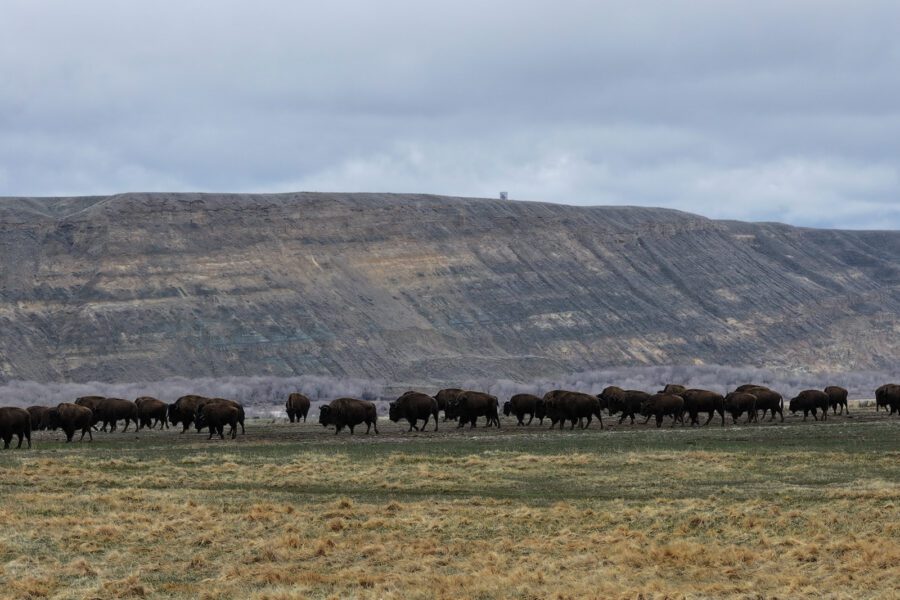


 The Bridger-Teton National Forest in western Wyoming spans roughly 3.4 million acres and represents one of North America’s most critical big game migration landscapes. Nestled within the Greater Yellowstone Ecosystem, it supports mule deer, pronghorn, elk, moose, grizzly bears, cutthroat trout, and sage grouse, while providing intact migration routes, winter range, birthing habitat, and working landscapes vital to Wyoming’s rural communities and outdoor traditions. The Wyoming Range mule deer migration ranks among the longest and most studied in the American West. Research by the Wyoming Game and Fish Department, University of Wyoming, and USGS underscores the urgency of preserving habitat connectivity across highways, ranches, foothills, and high-elevation public lands.
At the center of this effort is the Bridger-Teton National Forest Plan revision — its first update in decades — a process expected to conclude by 2028. WWF is working to ensure the revised plan reflects the best available science and advances durable conservation outcomes. WWF also supported the recent formal designation of the Sublette pronghorn migration corridor and is now working to strengthen Wyoming’s broader migration corridor policy framework.
The project unfolds in two phases. From 2026–2027, WWF and TRCP will focus on community engagement across Pinedale, Big Piney, Kemmerer, La Barge, Alpine, Cokeville, and Afton — conducting one-on-one meetings, attending local events, and developing the “Wyoming Range Voices” storytelling initiative to elevate hunters, outfitters, landowners, and community members. From 2027–2028, as the Draft Environmental Impact Statement is released, WWF will transition to broader public mobilization, submitting scientific comments, organizing workshops, and coordinating coalition advocacy.
Protecting migration corridors strengthens biodiversity, climate resilience, and Wyoming’s outdoor economy — supporting outfitters, guides, tourism, and rural businesses that depend on healthy wildlife populations. WWF’s approach centers on collaboration, science-based management, and respect for Wyoming values rather than political conflict.