
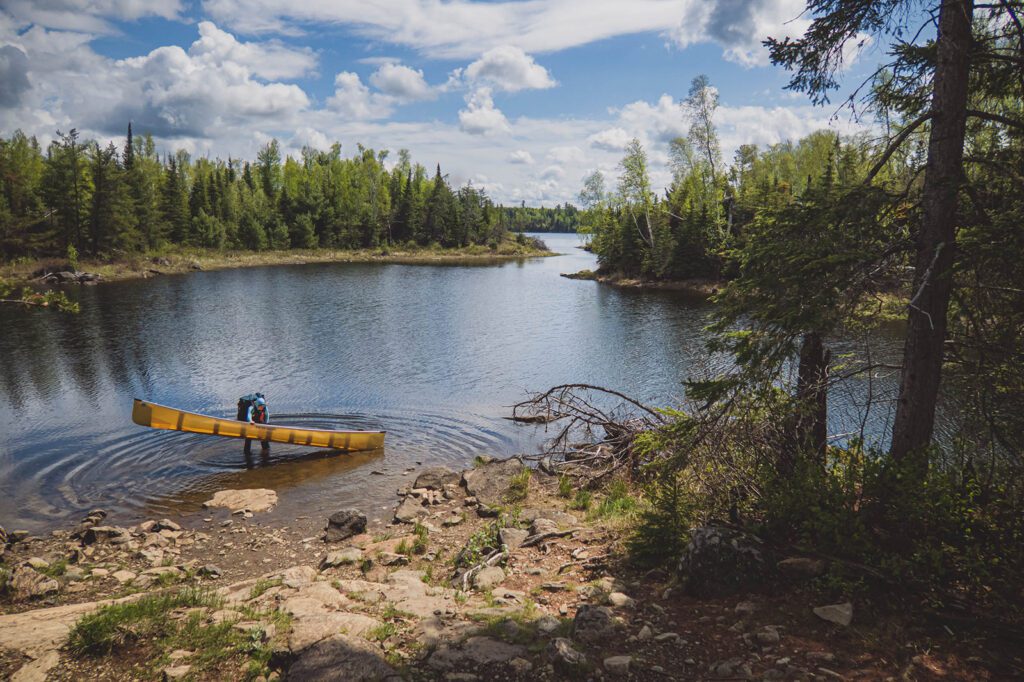
The Boundary Waters Canoe Area Wilderness is a 1.1-million-acre mosaic of lakes, rivers, wetlands, and boreal forest stretching across Northeastern Minnesota along the Canadian border. As America’s most visited Wilderness Area, it draws paddlers, anglers, hunters, campers, and wildlife enthusiasts to more than 1,200 miles of canoe routes, 2,000 designated campsites, and habitat supporting countless migratory species. The region sits at the headwaters of the Rainy River Watershed, where water flows north through Voyageurs National Park and into Canada. This hydrology makes the entire ecosystem acutely vulnerable to upstream contamination. The proposed Twin Metals sulfide-ore copper mine poses a serious threat. Sulfide-ore mining has a well-documented history of acid mine drainage and long-term water pollution. The region’s boreal forests, peatlands, and wetlands store significant carbon, support exceptional biodiversity, and connect directly with Quetico Provincial Park and Voyageurs National Park, forming an internationally significant wildlife corridor.
Beyond its ecological value, the Boundary Waters is an economic engine and cultural cornerstone. Gateway communities like Ely, Grand Marais, and Tofte depend on tourism, outfitting, guiding, and recreation-based businesses. Protecting the watershed means sustaining a renewable recreation economy rather than gambling on a short-term extraction model that could leave behind pollution, liability, and economic decline.
Sportsmen for the Boundary Waters (SFBW) has spent more than a decade building the coalition needed to defend this place. Their strategy centers on bipartisan advocacy — translating conservation values into language rooted in clean water, wildlife habitat, public access, and outdoor heritage. That framing has proven particularly effective in bridging political divides, engaging conservation-minded leaders and community members alongside traditional environmental allies. The coalition spans hunters, anglers, paddlers, Tribal partners, outdoor businesses, veterans, youth groups, and local residents. Indigenous voices are elevated as essential leaders in this effort. Key areas of focus moving forward involve Public Land Order 7917, Twin Metals lease reinstatement decisions, NEPA review processes, Clean Water Act permitting, and potential state and federal legislation establishing mineral withdrawal protections in the Rainy River headwaters.