
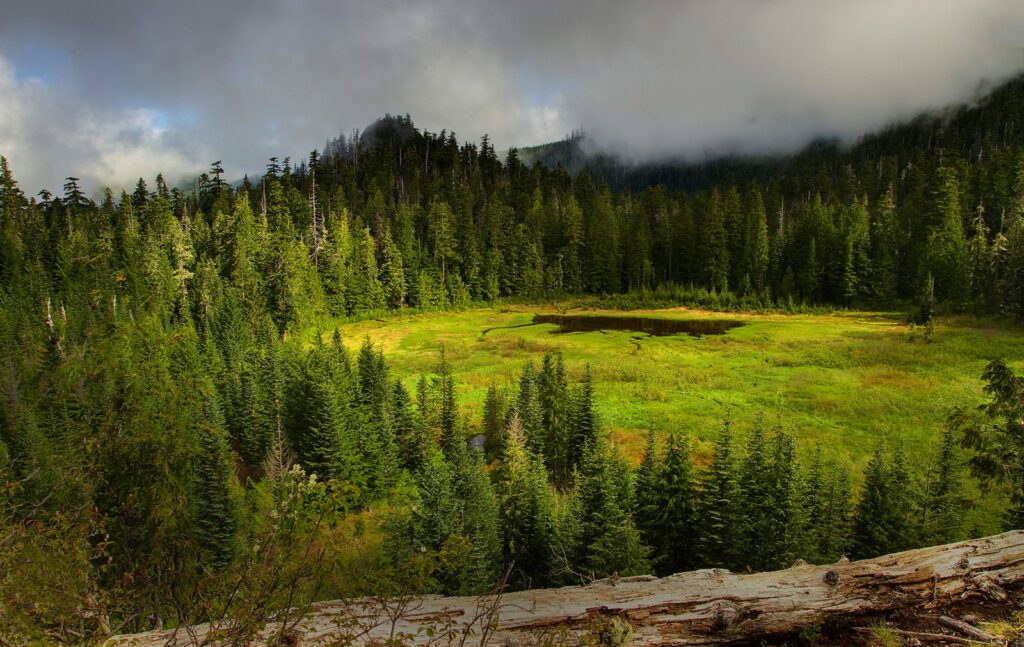
The O&C lands of western Oregon have a complex history, being granted to the Oregon & California Railroad before reverting to federal management under the BLM. Today, these roughly two million acres represent some of the Pacific Northwest’s most biologically rich forests, spanning the Siskiyous, Coast Range, and Cascades. They provide clean drinking water to urban and rural communities, support salmon and steelhead runs vital to Oregon’s fishing industry, offer recreational opportunities generating over $8 billion and 200,000 jobs statewide, and store vast amounts of carbon critical to climate resilience. These forests hold 900,000 acres of old growth and 590,000 acres of mature forest. Many stands sit at low elevations along major river tributaries, making them home to some of the largest and oldest remaining trees in the state, as well as critical habitat for spotted owls, marbled murrelets, salmon, and red tree voles.
In February 2026, the administration proposed a sweeping revision to BLM management that would open 2.5 million acres to clearcutting. The proposal also threatens 80,000 acres of protected Areas of Critical Environmental Concern, including beloved places like Crabtree Valley, the Wild Rogue, and the North Fork Clackamas River. Scientists project this logging would release 180 million tons of carbon over the next century.
Oregon Wild is leading a broad coalition response, engaging Oregon’s congressional delegation, mobilizing grassroots activists, pursuing litigation, building relationships with Tribes, and coordinating with businesses and local governments. Encouragingly, multiple members of Oregon’s congressional delegation and the Multnomah County Commission have already voiced opposition to the proposal.