
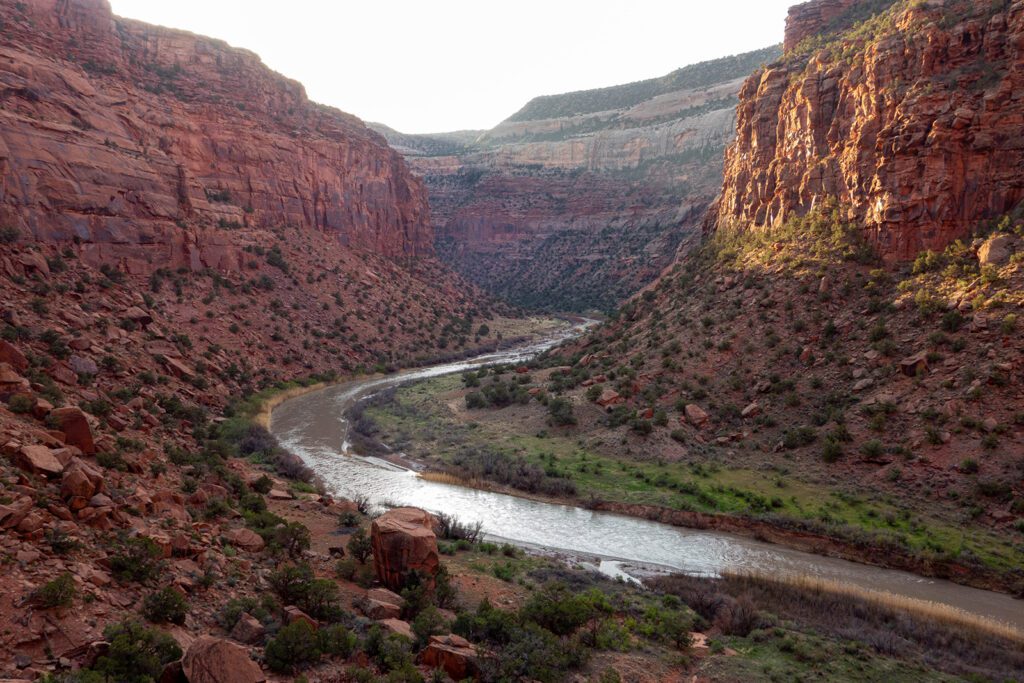
The BLM’s Uncompahgre Field Office Resource Management Plan Amendment (UFO RMPA), expected in 2026, will determine the future of the Dolores River Canyon Country—Colorado’s largest unprotected biologically diverse landscape, spanning nearly 700,000 acres of red rock canyons and mesas linking the San Juan Mountains to the Colorado River.
This region holds two of Colorado’s top ten biodiversity hotspots, sheltering imperiled species like the threatened Gunnison sage-grouse and three native warmwater fish species, while serving as a critical migration corridor for desert bighorn sheep, elk, and mule deer. The Dolores River itself runs 230 miles through remote wilderness, supporting world-class rafting and hunting central to Western Slope identity.
A strong RMPA would codify ecosystem protections and secure a sustainable, multi-generational recreation economy; a weak plan would prioritize extraction, jeopardizing wildlife corridors and habitat connectivity—particularly for bighorn sheep herds linking protected areas and Gunnison sage-grouse recovery potential. Colorado’s outdoor recreation economy ($65.8 billion statewide) is especially vital to gateway communities like Grand Junction and Montrose, where it already generates $484 million (7.2% of GDP) in Mesa County alone.
Conservation Colorado Education Fund’s campaign focuses on federal and state decision-makers, alongside local elected leaders in Delta, Mesa, and Montrose Counties. The organization leverages the Colorado Outdoor Business Alliance, a 300+ business coalition to build cross-sector impact. Plans include bilingual comms and engagement resources, mobilizing community spokespeople, and ensuring environmental justice priorities are woven into the coalition’s technical comments—reinforcing that protecting this landscape serves both ecological integrity and long-term community economic resilience.