
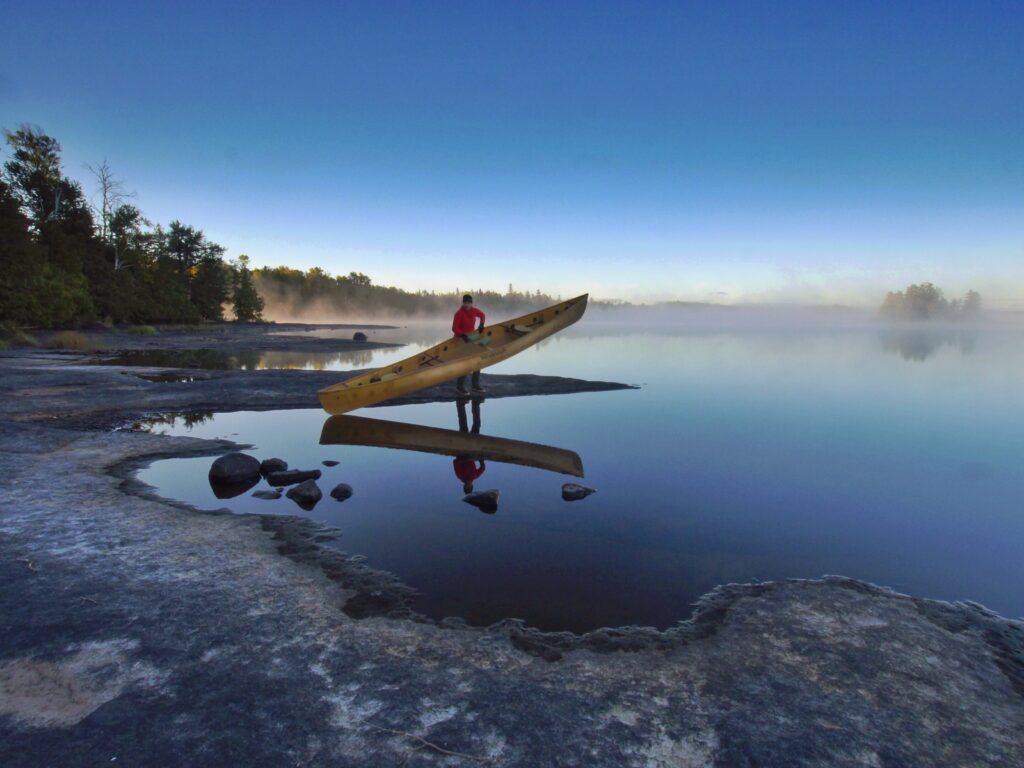
(January 15, 2026) – The Boundary Waters Canoe Area Wilderness in northern Minnesota has come under threat. Minnesota’s Representative Stauber introduced a resolution utilizing the Congressional Review Act (CRA) to remove the mineral withdrawal banning mining placed by the previous administration. This withdrawal protects 225,504 acres of Superior National Forest land, which is interconnected with waters across the Wilderness. If this resolution passes Congress, it is highly likely that mining leases will move forward. Opening the region to sulfide-ore copper mining will decimate the region’s thriving outdoor recreation economy, critical habitat for a variety of native species, and key areas for Tribal hunting, fishing, gathering rights.
The Congressional Review Act is a potent tool to override former agency decisions. The CRA has been utilized multiple times this past year in an unprecedented manner, and this is another instance of the CRA being applied in a way that sets a troublesome precedent for the role of Congress in public lands management.
Rolling back the mining ban in the region would also put thousands of jobs at risk and threaten the state’s $13.5 billion outdoor recreation economy. The Boundary Waters is the most visited Wilderness Area in the United States, and is part of a system of parks and wild public lands that stretches across the Canadian border. Home to 1,100 lakes, 237.5 miles of hiking trails, and 2,000 designated campsites, the 1.1 million acre Wilderness attracts thousands of visitors every year for activities such as camping, fishing, paddling, dog sledding, hunting, and hiking.
The Conservation Alliance, a coalition of approximately 200 businesses around the country working together to protect North America’s natural spaces and outdoor places, opposes this bill, and the unprecedented use of the Congressional Review Act to eliminate current and all future protections of this landscape.
“The Boundary Waters Canoe Area Wilderness offers unmatched recreation opportunities for Minnesotans and visitors alike. Removing protections from this region will not only cause irreversible harm to water quality, wildlife, and public health, it will also be detrimental to hundreds of local businesses and their thousands of employees,” said Paul Hendricks, Executive Director of The Conservation Alliance. “Protecting this Wilderness for its outdoor recreation and conservation benefits provides much needed support to the area’s economies and communities – something that we need our Members of Congress to recognize when determining the fate of this beloved landscape.”
“TripOutside partners with local outfitters who not only power the thriving outdoor recreation economy around the Boundary Waters Canoe Area Wilderness but also act as stewards of this national treasure. These businesses have built their livelihoods around protecting and sharing this pristine landscape, ensuring it remains intact for future generations. Removing protections threatens not only these sustainable businesses but also one of the most unspoiled ecosystems in the world—putting clean water, wildlife, and the broader environment at risk. Once this wilderness is degraded, it cannot be undone. We urge the House of Representatives to safeguard the Boundary Waters and the businesses, communities, and ecosystems that depend on its protection.” – Julie Singh, Co-Founder of TripOutside
“The idea for the Sven-Saw® was born when Dick Swenson was on a trip in the ‘Canoe Country,’ as it was known until it became the BWCAW. Over 64 years later, Sven-Saws are preferred by outfitters and adventurers. Our business creates Minnesota jobs in manufacturing as well as the outdoor and tourism industries, and we rely on wilderness remaining protected. We are positive that the BWCA provides more value and economic benefit in the long run as a wilderness and hope the region is not compromised for short-term gains from likely disastrous copper mining.” – Linnea Swenson Tellekson, President of Sven-Saw
“The Boundary Waters Canoe Wilderness Area contains some of the most accessible and well-visited wilderness in the United States, with 1,100 lakes, pristine forests and thriving wildlife,” said Patagonia CEO Ryan Gellert. “The Boundary Waters drive more than $1 billion in tourism revenue for the Midwest each year, with abundant opportunities for paddling, camping, hiking, fishing and hunting. Copper mining would threaten all of that. I’m imploring the House of Representatives not to support any short-sighted plans to enrich foreign mining companies at nature’s expense. Instead, we should all protect this uniquely American landscape.”
About The Conservation Alliance
The Conservation Alliance is the leading business coalition for conservation. Uniting companies across industries, perspectives, and geographies, we harness the collective power of our members to protect lands and waters for future generations. Our dual top-down and bottom-up approach pairs corporate advocacy with funding for grassroots action on the ground. Investing in The Conservation Alliance is not only an investment in protecting the resources outdoor businesses depend on—it’s a way to strengthen the outdoor economy and ensure long-term business resilience. Since its founding in 1989, TCA and its members have helped protect over 125 million acres of and nearly 5,000 river miles by advocating for common-sense policies and granting $34.9 million to local groups to improve and protect critical landscapes across the country. With natural places facing a barrage of threats, they welcome all brands that value North American landscapes to join them in leveraging the power of business to drive conservation. For complete information about The Conservation Alliance, visit conservationalliance.com.
Media Contact:
Lilly Zoller
248-302-1553
[email protected]