
By Drew Simmons
As the oldest long-distance hiking trail in the country, the Long Trail attracts thousands of hikers each year to travel the spine of Vermont’s Green Mountains from Massachusetts to the Canadian border.
Along the way, it takes the high route past hill farms, over renowned ski communities, and into the rugged stretches of the state’s northern tier. It’s a remote part of the country, where trees far outnumber people, yet it faces the same pressures seen across the region: growing development and competing land uses.
This is a story about one family’s commitment to conservation and their partnership with Trust for Public Land to protect a nearby forest.

Not far from the northern Long Trail is the town of Montgomery, Vermont, and the home of Matt and Barb Paggi. The couple are co-owners of Barred Woods Maple, a sugaring business producing syrup and forest products from more than 30,000 trees.
For the Paggis, their interest in turning tree sap into a regional delicacy began out of simple curiosity, more than two decades ago, as they explored the potential of a few trees in their backyard. And over the years, it grew to be far more than just a hobby.
That same curiosity led the Paggis into the world of conservation, biodiversity, and connectivity. A few years ago, the Paggis learned how to manage their sugarbush in ways that create valuable habitat for various bird species, and so they became certified as a “bird friendly maple operation” by Audubon Vermont. And now, they’re learning how to use a 711-acre piece of rocky, remote forest near their Montgomery home to support the big picture of conservation in the region.
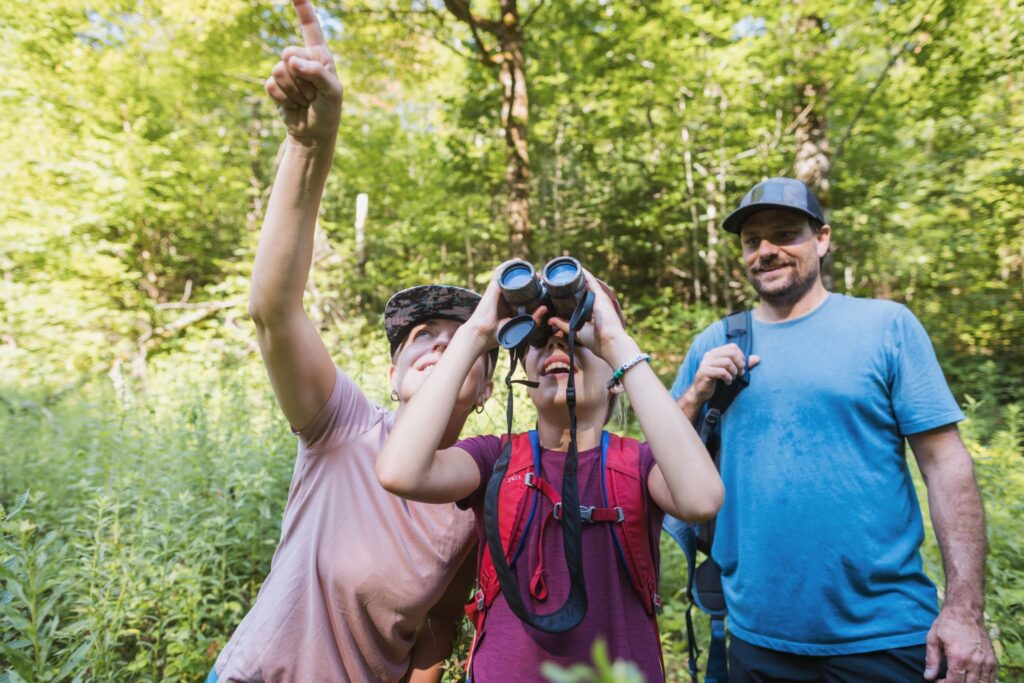
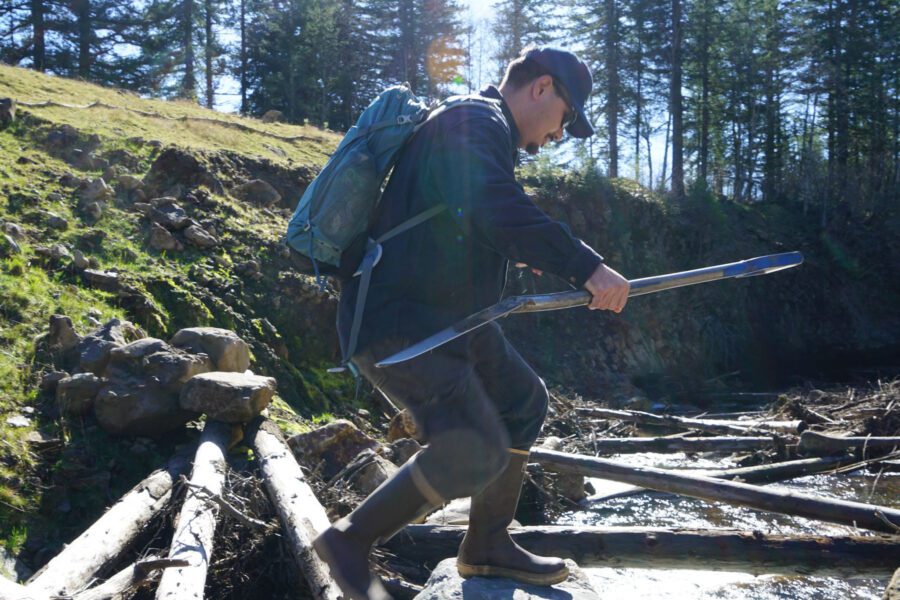
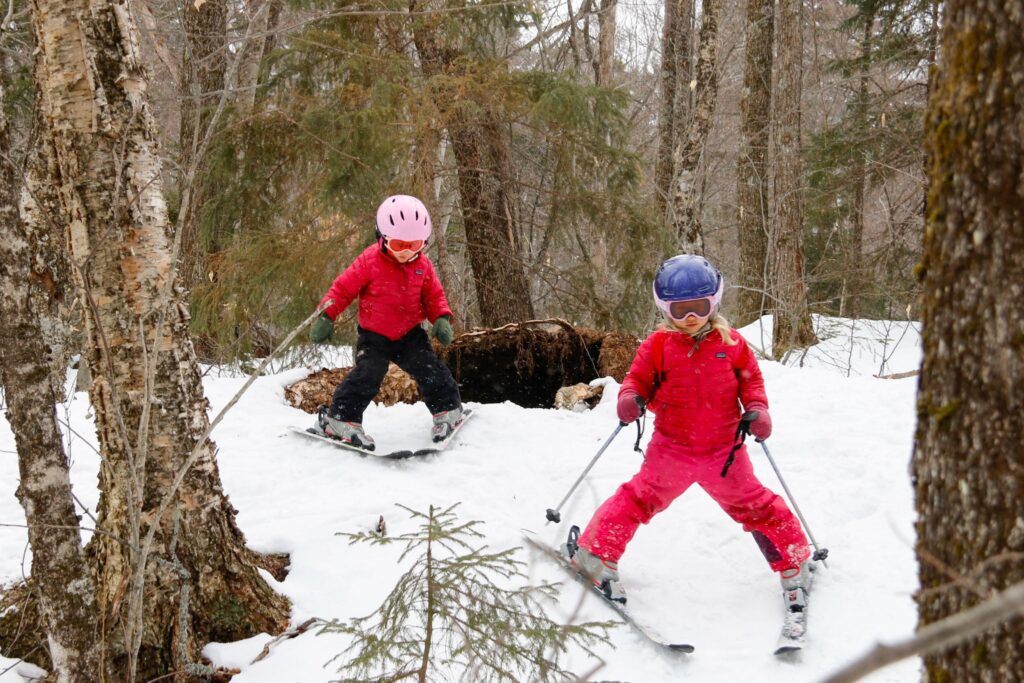
The Paggi’s land borders the Long Trail State Forest, close enough to the Long Trail that occasional hikers wander down their road heading for resupply in town. In the winter, skiers traverse the Paggi’s land on a 2-mile stretch of the Catamount Trail, a ski-trail that, like the Long Trail, runs the length of Vermont. In the summer, anglers explore its streams for native brook trout. And around it all is a spectacular diversity of both plants and animals – beaver ponds, bobcat and bear habitat, rich soils, dense forest and thriving plant life.
When the Paggis bought their homestead in 2004, the surrounding forestland was in a different state. It had been unsustainably harvested. Over the years, the Paggis worked with forest managers using a more holistic strategy to bring it back to a healthy, resilient forest. And as the land began to work again – both for biodiversity as well as for the occasional timber harvest – the Paggis understandably fell increasingly in love with the land. And as they did, they began to see a new opportunity.
“We have come to really enjoy this place. Seeing the wildlife firsthand, seeing all the natural processes firsthand. This is a very special piece of land with special attributes. Our goal is to make sure that future generations can enjoy it as we have,” said Matt Paggi.
In 2017, the Paggis accepted an invitation by Charlie Hancock and Nancy Patch to learn more about an organization they had founded called the Cold Hollow to Canada Partnership. With a vision of a “resilient and connected ecosystem … that is supported through permanent protection, sustainable stewardship, and engaged local communities,” the Partnership is a “peer led” organization that spans seven towns just south of the Canadian border. It’s a group where friends learn from friends about the hows and whys of conservation.
Both practical and social, the Partnership united landowners in “woodlots” to jointly learn about and act on conservation, helping families like the Paggis align efforts with neighbors to meet larger regional goals like habitat connectivity and Vermont’s 30 x 30 commitment, which has a state goal to conserve 30% of its total land and waters by 2030 and 50% by 2050.
“Connectivity and conservation are really big ideas,” said Paggi. “Because while much of the land around here exists in a natural state, those places are also largely isolated from each other, and in constant pressure of being sliced and divided even more,” said Paggi.
Through the Cold Hollow to Canada Partnership, the Paggis were introduced to Kate Wanner from Trust for Public Land, a national non-profit focused on connecting everyone to the outdoors and well known as a key behind-the-scenes engine for anyone seeking to conserve land for the greater public good. Wanner quickly recognized the opportunity to conserve an important place within the Green Mountains for numerous reasons, including recreation, climate resiliency, wildlife habitat connectivity, forest health and water quality.
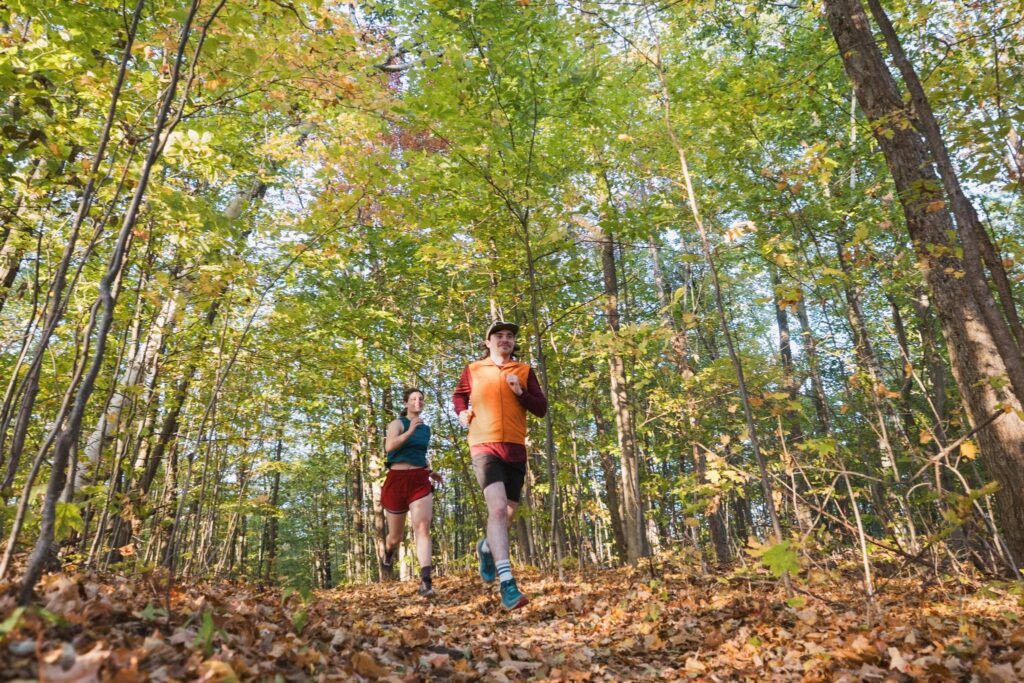
Now, Trust for Public Land is partnering with the Paggis to permanently protect the 711 acres in Montgomery with a conservation easement, protecting these forests for future generations.
With a track record of success that includes the protection of more than 52,500 acres within the Green Mountain region over the past decades, Trust for Public Land is a known and respected partner who has been able to secure support from funders like the Forest Legacy Program, as well as one of the most vibrant and successful private conservation sources, The Conservation Alliance.
Originally founded by four outdoor industry companies more than 35 years ago, The Conservation Alliance has approximately 200 members – including Osprey – who pool their resources to support front-line conservation work nationwide. Last year, the business coalition provided almost $1.5 million to fund 37 projects and supported efforts that resulted in the protection of almost 860,000 acres.
With the combined support of Trust of Public Land and The Conservation Alliance, the Paggis vision is now coming into focus – permanently conserving that 711 acres by the end of 2026, ensuring wildlife connectivity, climate resiliency, and supporting the local forest products industry by supplying maple sap and high-quality timber.
The Paggis have also been able to make progress on other parts of that vision – learning more about conservation (“we were definitely newbies when we started”) and putting that newfound awareness into helping others join grassroots conservation efforts.
Because in the same way that the Long Trail connects Massachusetts to Canada by foot trail, and that conserved land maintains connections between plants and animals and the broader forest, the Paggis are also eager to connect with other people on the topic of conservation: “Encouraging others to do similar things to this, that has been a goal for us all along,” said Paggi.
Trust for Public Land
Trust for Public Land is a national nonprofit that works to connect everyone to the benefits and joys of the outdoors. Since 1972, TPL has protected more than 4 million acres of public land, created more than 5,504 parks, trails, schoolyards, and iconic outdoor places, raised $112 billion in public funding for parks and public lands, and connected nearly 109.7 million people to the outdoors. To learn more, visit tpl.org.
The Conservation Alliance
The Conservation Alliance is the leading business coalition for conservation. Uniting companies across industries, perspectives, and geographies, we harness the collective power of our members to protect lands and waters for future generations. Our dual top-down and bottom-up approach pairs corporate advocacy with funding for grassroots action on the ground. Investing in The Conservation Alliance is not only an investment in protecting the resources outdoor businesses depend on—it’s a way to strengthen the outdoor economy and ensure long-term business resilience.To become a member, go here. To make a one time or recurring donation, go here.
This story was originally featured by Osprey, a TCA member company, and is being reposted with their permission. The original article can be found here.